High-quality property images play an important role in attracting potential buyers and tenants. Whether someone is searching for a luxury apartment, an independent house or a commercial property, photographs often create the first impression. Dark interiors, poor lighting and unwanted objects can make even an attractive property look unappealing.
Professional image editing helps overcome these challenges by improving the visual quality of property photographs. However, choosing the right photo editing company requires careful consideration of quality, experience, pricing and delivery time.
Here are the key factors to consider when selecting a real estate photo editing service.
1. Understand Your Real Estate Photo Editing Requirements
Different properties require different editing techniques. Residential properties may need brightness adjustments and colour correction, while luxury homes may require detailed retouching and advanced image enhancement.
Some common real estate photo editing requirements include:
• Colour and brightness correction
• HDR image blending
• Unwanted object removal
• Sky replacement
• Perspective correction
• Interior and exterior retouching
• Virtual staging
• Day-to-dusk image conversion
Understanding these requirements helps real estate agents, photographers and property developers select suitable photo editing services for their marketing needs.
2. Check Industry Experience and Expertise
Real estate photography requires a different approach from fashion, portrait and product photography. Editors must understand architectural details, natural lighting, interior design and property presentation.
Experienced professionals know how to balance indoor and outdoor lighting without making images appear artificial. They also understand how to correct distorted walls, uneven colours and unwanted shadows.
Look for service providers with experience in editing residential apartments, commercial buildings, villas, hotels and office spaces. Relevant industry experience can help ensure better results.
3. Review the Portfolio and Sample Images
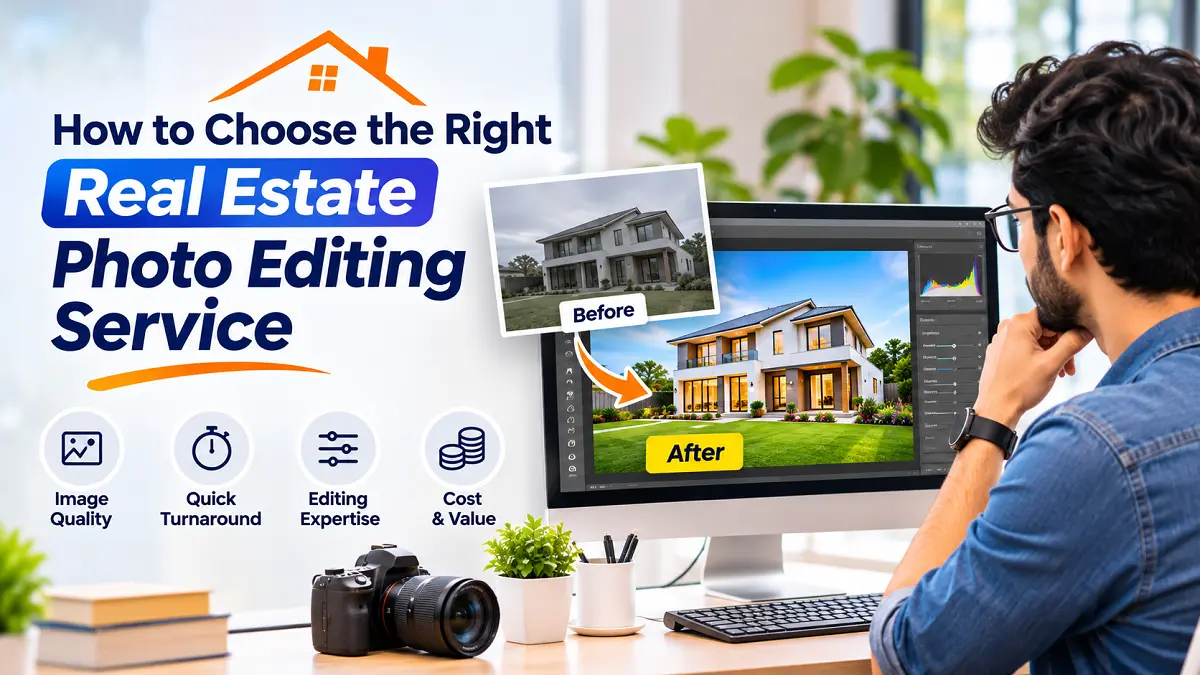
A portfolio is one of the best ways to evaluate editing quality. Reviewing before and after images helps identify the level of improvement achieved through professional editing.
Pay attention to the following aspects:
• Natural colour balance
• Clear architectural details
• Realistic lighting and shadows
• Accurate property representation
• Consistent image quality
• Clean and detailed interiors
A reliable service provider should be able to improve property photographs without making them look heavily edited. Requesting a sample edit can also help assess whether the results meet your expectations.
4. Look for a Wide Range of Editing Services
Real estate businesses often manage different property types and marketing requirements. Working with a provider that offers multiple editing solutions can simplify the process.
Editing service Key purpose
| Editing service | Key purpose |
|---|---|
| HDR blending | Balances bright and dark areas |
| Colour correction | Improves colour accuracy |
| Sky replacement | Enhances exterior photographs |
| Perspective correction | Corrects distorted architectural lines |
| Object removal | Removes distracting elements |
| Virtual staging | Adds digital furniture to empty spaces |
| Day-to-dusk conversion | Creates an evening atmosphere |
| Image sharpening | Improves clarity and detail |
Professional photo enhancement services can help create visually appealing property listings while maintaining a realistic appearance.
5. Prioritise Natural and Realistic Results
The purpose of real estate photo editing is to highlight a property’s existing features rather than misrepresent them.
Excessive colour saturation, unrealistic lighting and misleading structural changes can create false expectations among potential buyers. When buyers visit the property, noticeable differences between photographs and reality may reduce their trust.
Good editing should preserve the original layout, dimensions, permanent features and architectural details. Any significant digital alterations, such as virtual staging, should be clearly disclosed.
6. Consider Turnaround Time and Editing Capacity
The real estate industry often works with tight marketing schedules. Delays in receiving edited photographs can affect property listings, advertising campaigns and promotional activities.
Before selecting a photo editing company, check its standard delivery time, daily editing capacity and ability to manage urgent projects.
Property developers and real estate agencies handling multiple listings should also ensure that the provider can manage bulk editing requirements without compromising quality.
7. Compare Pricing and Service Quality
Affordable pricing is important, but the lowest price may not always deliver the best results. Poorly edited images can lead to additional expenses, repeated revisions and delays.
When comparing photo editing services, consider the editing complexity, image volume, revision policy, delivery time and overall quality.
Transparent pricing helps businesses manage their marketing budgets and avoid unexpected charges. Requesting a sample edit before committing to a large project can also support better decision-making.
8. Check Data Security and Image Confidentiality
Real estate photographs may contain private interiors, personal belongings, confidential property details or unpublished project information.
A professional editing service should follow appropriate data protection practices. Understand how the provider handles image storage, file transfers, confidentiality and file deletion.
This is particularly important for luxury properties, commercial developments and upcoming residential projects.
9. Evaluate Communication and Customer Support
Clear communication helps editors understand project requirements and deliver consistent results.
Choose a provider that responds promptly, accepts feedback and follows specific editing instructions. A clear revision policy is also important when adjustments are required.
Reliable communication becomes especially valuable for long-term projects involving multiple properties and large volumes of images.
Frequently Asked Questions
1. What is real estate photo editing?
Real estate photo editing involves improving property photographs through colour correction, lighting adjustments, retouching and other techniques to enhance their visual quality.
2. Why is photo editing important in real estate?
It helps showcase property features, improve online listings, attract potential buyers and create a positive first impression.
3. How much does real estate photo editing cost in India?
The cost depends on the number of images, editing complexity, required services and delivery time. Basic corrections generally cost less than advanced retouching and virtual staging.
4. How long does real estate photo editing take?
Delivery time depends on image volume and editing requirements. Basic editing generally takes less time than detailed retouching, HDR blending or virtual staging.
5. Can photo editing help sell properties faster?
Professional images can attract more attention and encourage property enquiries. However, sales also depend on location, pricing, property condition and market demand.